I swear it didn’t used to feel like things went this fast.
There were moments recently where I wished for things to slow down, but I realized what’s next isn’t really what’s scary, it’s getting left behind before it comes.
You don’t want to miss the last train.
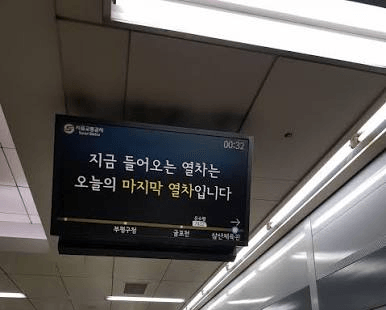
If you do, I think there are three possible outcomes:
- The train crashes and the train station blows up.
In this scenario, even if you made it on the train, things don’t end well anyway, so whether you got on or not didn’t really matter.
- The schedule said that was the last train, but magically a new train appears and it’s infinitely fast and infinitely long.
In this scenario, even if you made it on the train, you get where you wanted to go almost immediately anyway, so whether you got on or not didn’t really matter.
- You wait until the first train the next day and things are really different: the train teleports around using technology you’ve never seen and there are aliens on board, but it’s still a train. You get on, get taken to your destination, and get off.
In this scenario, things are really different and yet in many ways the same.
I think this last description is the best way to think about the oncoming change that seems inevitable at this point. In such a world, it’s okay to miss out on some temporary progress. Yes, you will get dropped into a world where a step function’s worth of change has occurred while you were gone. But isn’t that also what happened when you were born in this era, into a world unimaginable by humans even half a century ago? And yet with very little effort you learned what needed to be learned, and found something valuable to do. Again it is likely to be the same.
To be honest, the first and second scenarios, dystopia and utopia, are really just alternative interpretations of the same changed future. One can simply look at the current world from a historical perspective to see both. A peasant from 100 years ago probably would’ve described a world where one can eat whatever they desire at any time of year as a utopia, and in 2026 we do in fact have grocery stores in developed countries. A peasant from 100 years ago might also view the vast networks of unimaginable harm, depravity and abuse enabled by modern technologies to be indistinguishable from an apocalyptic scenario.
It is simply a matter of perspective.
Just over a year ago Sam Altman wrote The Gentle Singularity, and I remember laughing. But now I see it, not in the sense of some binary moment of change, but as the continuation of an existing path that is easy to forget.
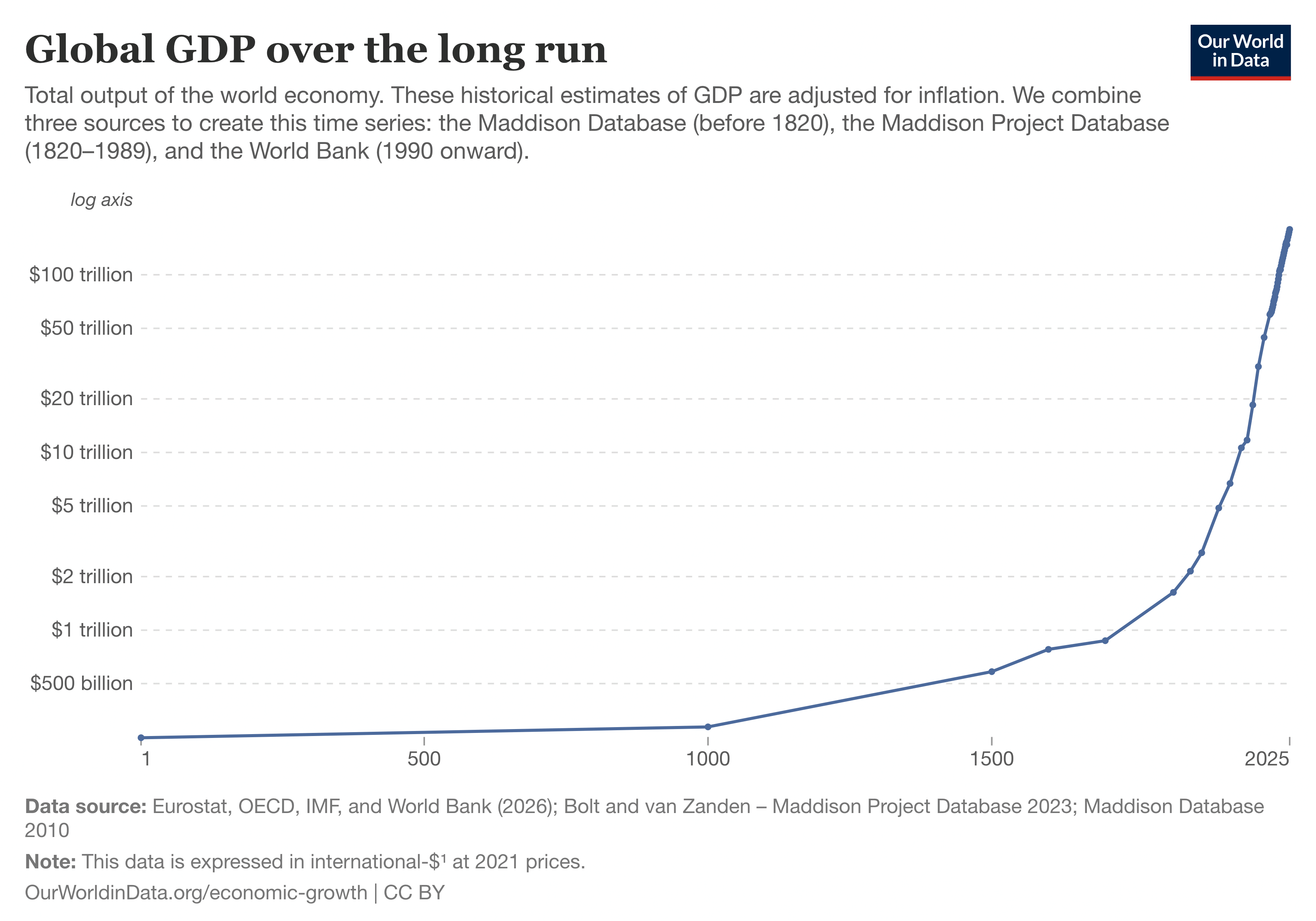
If I make the train, I hope the ride is enjoyable. Maybe with some bumps along the way to keep things interesting.
And if I don’t, I feel confident I can hop back on in the morning. A different train, but still a train nonetheless.